19 Feb 2024

Photochemical reactors are devices designed to carry out chemical reactions that are initiated or accelerated by light, typically in the ultraviolet (UV) to visible spectrum range. These reactors are equipped with light sources (like UV lamps, LEDs, or sunlight) to provide the necessary photon energy for photoreactions. They are used for a variety of applications, including the synthesis of complex organic compounds, degradation of pollutants, and photo-induced polymerization, benefiting from precise control over light intensity, wavelength, and exposure time to optimize reaction conditions and outcomes.
This blog is part 1 of a two-part series on photoreactors.
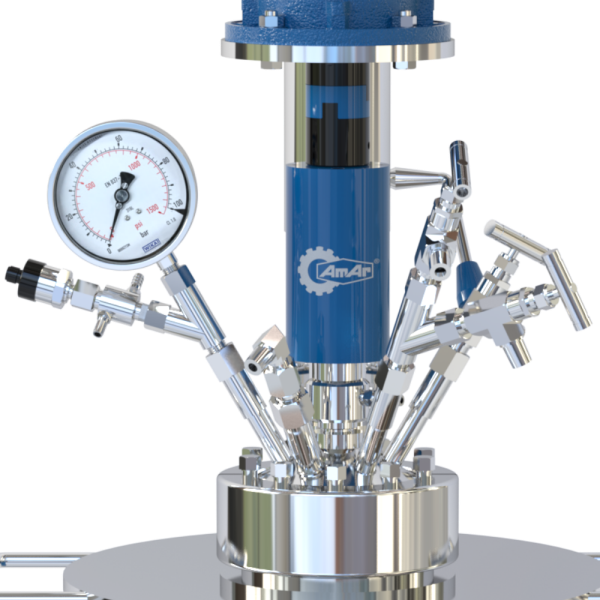
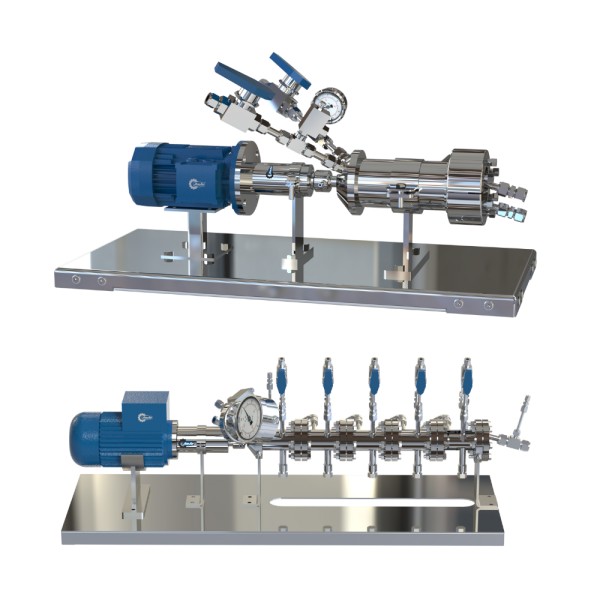
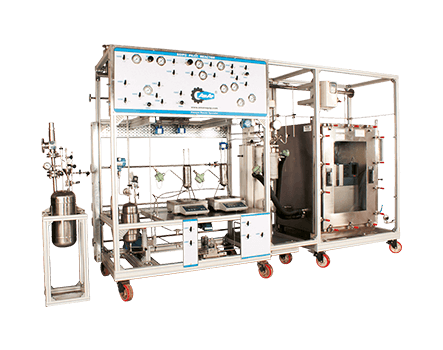
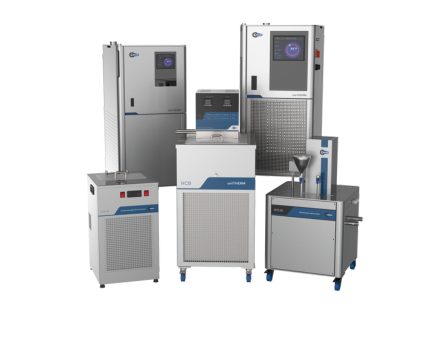
At Amar, we have introduced models of photochemical reactors to serve our customer's needs. Please contact our teams for more details. Below are some of our photochemical reactor models.
Some common examples of reactions which have been demonstrated to work well in photochemical mode are the following:
The blog reader is recommended to study past literature on photochemical reactors. Extensive experience exists. For example, photochemical sulphoxidation of paraffins with SO2 and O2 mixtures is known in the literature (Fischer, 1978) where water is used to extract sulphonic acid to prevent the formation of di- and poly-sulphonic acids. We cite the following passage from the excellent book on Fine Chemicals (2001) by Cybulski, Mouljin, and Sharma:
“The best-known examples, viz. side-chain chlorination of toluene and addition of chlorine to benzene may be cited (sulphochlorination and sulphoxidation are additional examples). The photochemical initiation permits operation at low temperatures. It is particularly useful when the radical chains are very short resulting in the requirement of very many initiating radicals. We do not suffer from the disadvantages inherent to large-scale processes where multiple photochemical reactors are required (e.g. in Nylon production, for the oximation of cyclohexane with NOCI). In the synthesis of vitamin D3 and the hydroxy-derivative of vitamin A, photochemical processes have been employed. Photo-isomerization of cis- to trans-vitamin A acetate has been successfully practiced. Photooxygenation is an important step in the manufacture of the perfumery chemical Rose oxide, starting from citronellol. Reactions based on ozone are also amenable to intensification improvement through photoactivation. It is possible to scale up photochemical reactions from bench scale work to industrial units employing 40-60 kW lamps. Photochemical reactions can be further improved by manipulation of the microenvironment through the use of micelles, microemulsions, etc., and through the macroenvironment by using cyclodextrins (Kalyansundaram, 1987). In gas-liquid reactions where mass-transfer resistance is important, we need to analyze the problem more intensively, although some preliminary work has been done by Mahajani and Sharma (1981)”
Overall photochemical reactors are a very promising alternative for most of our customers. It is an application with great potential if utilized for the right types of reactions. Our estimate is that less than 5% of the potential of photoreactors has been explored. There is a gap in translating academic knowledge to industrial settings. Most labs rarely have a photoreactor. Investing in a photoreactor is a wise decision since it allows you to screen your existing portfolio of reactions for improvement.
Talk to us at Amar for your next requirements for photochemical reactors [email protected].
Stay tuned for Part 2 of this blog series on photoreactors for more details.