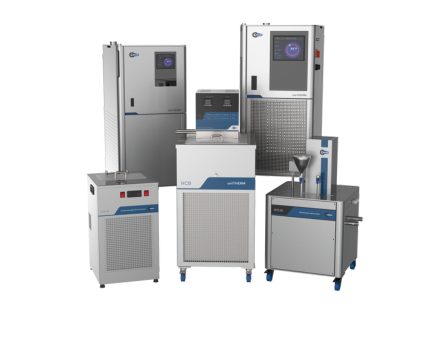
Our Heating Cooling Circulators and temperature control units are designed to deliver precise and reliable thermal management for laboratory, pilot plant, and industrial process applications. The portfolio includes closed loop thermostats, high temperature thermostats, open bath thermostats, recirculating chillers, and compact mini chillers, enabling temperature control across a wide operating range from –90°C to +350°C.
These systems circulate heat transfer fluid through jacketed reactors, crystallizers, autoclaves, and heat exchangers to maintain stable and uniform process temperatures. Advanced PID thermostat control provides temperature stability of up to ±0.5°C, ensuring reliable process performance. The systems feature intuitive digital interfaces, programmable temperature profiles, and integration with PLC, SCADA, and DCS platforms via Modbus, while CFC-free refrigeration ensures sustainable and low-maintenance operation.
A Heating Cooling Circulator is a precision temperature control unit designed to regulate the temperature of external process equipment such as jacketed reactors, autoclaves, crystallizers, heat exchangers, and pilot plant systems. The system operates by circulating a heat transfer fluid through the jacket of the process vessel in a closed loop.
The heating cooling circulator uses a combination of electrical heating elements, refrigeration systems, and PID-based thermostat control to maintain highly stable process temperatures. The integrated pump continuously circulates the thermal fluid, ensuring uniform heat transfer between the circulator and the process equipment.
Modern systems include RTD PT100 sensors and programmable PID cascade controllers that maintain temperature accuracy typically within ±0.5°C while providing rapid heating and cooling response. This level of control is critical for reactions such as nitration, hydrogenation, polymerization, esterification, and crystallization where reaction kinetics and product quality are temperature dependent.
While both systems are used for temperature regulation, they serve different thermal requirements within process environments.
Recirculating chillers primarily provide cooling only and are used when a process requires temperatures below ambient, typically down to about –15°C depending on the model. These systems circulate chilled fluid to remove heat from equipment such as condensers, analytical instruments, or laboratory equipment.
In contrast, a Heating Cooling Circulator functions as a complete temperature control unit, capable of both heating and cooling across a wide range of temperatures. Many systems operate from deep sub-zero temperatures up to +250°C or even +350°C for high-temperature thermostats, allowing them to handle both exothermic and endothermic reactions within the same process setup.
For laboratories and pilot plants, compact mini chillers may be integrated with heating circulators to create highly responsive temperature management systems for microreactors, flow chemistry setups, and jacketed vessels.
Advanced thermostat-based temperature control systems are engineered to operate across a wide thermal range depending on the configuration and heat transfer fluid selected.
Typical operating ranges include:
The actual process temperature depends on factors such as reactor insulation, piping length, heat transfer coefficient, and circulation flow rate. For high-temperature reactions or strongly exothermic processes, systems may be equipped with higher capacity heaters, compressors, or booster pumps to maintain stable temperature control under dynamic load conditions.
Recirculating chillers and mini chillers improve process stability by providing continuous and controlled removal of heat from equipment or reactions. Instead of relying on tap water or conventional cooling methods, these systems circulate chilled coolant through a closed loop, ensuring consistent cooling performance and minimal temperature fluctuations.
Key advantages include:
In many R&D laboratories and pilot plants, mini chillers are paired with heating cooling circulators to create a fully integrated temperature control unit capable of managing both heating and cooling cycles during multi-stage chemical processes.
Industrial heating cooling circulators are equipped with multiple layers of safety and automation features to ensure reliable and safe operation in demanding chemical and pharmaceutical processes.
Common safety features include:
Additionally, many modern systems incorporate advanced thermostat controllers, HMI touchscreen interfaces, RS-485 communication ports, and SCADA integration. These features allow real-time monitoring, programmable ramp-soak temperature profiles, and optional data logging for process validation and quality control.
Selecting the correct thermic (heat transfer) fluid is essential for achieving stable and efficient temperature control in a heating cooling circulator or temperature control unit. The thermic fluid temperature chart helps engineers identify fluids that operate safely within specific temperature ranges while maintaining optimal viscosity, thermal conductivity, and chemical stability.
Different fluids are designed for different operating conditions:
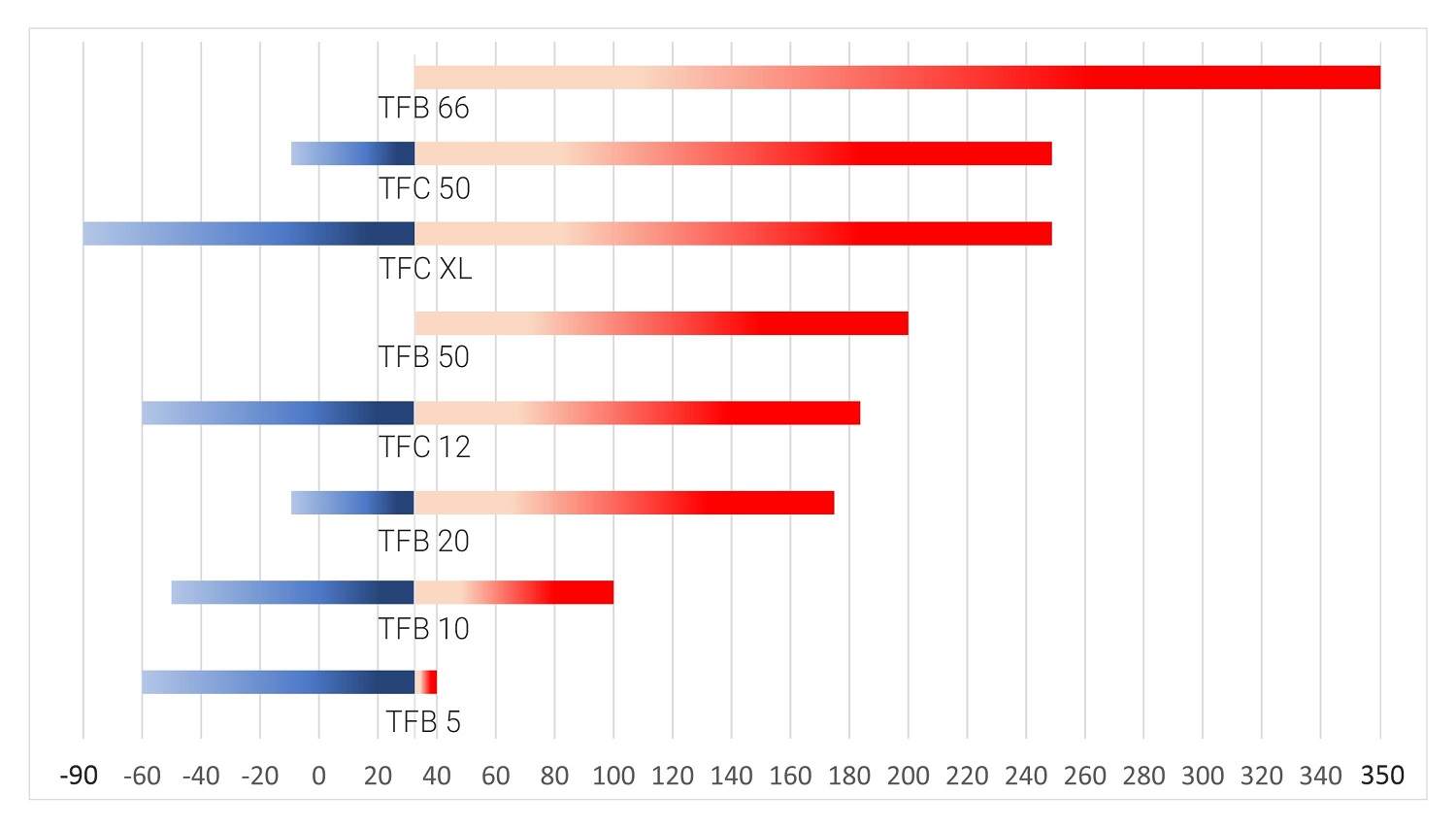
For low-temperature applications, fluids such as TFC XL or TFC 12 provide good pumpability and stability at sub-zero temperatures. For high-temperature processes, fluids like TFB 50 or TFB 66 are preferred due to their thermal stability and resistance to degradation.
When selecting a fluid, engineers should evaluate factors such as maximum process temperature, low-temperature viscosity, oxidation stability, vapor pressure, and compatibility with system materials. Choosing the appropriate thermic fluid improves heat transfer efficiency, protects internal components of the circulator, and ensures safe, reliable operation in laboratory, pilot, and industrial process systems.