Amar’s parallel synthesizers are advanced high throughput screening platforms designed to accelerate chemical development and process optimization in modern R&D environments. By integrating multiple reactors into a single, robust system, these parallel reactors enable researchers to run several experiments simultaneously under precisely controlled pressure, temperature, and agitation conditions. This parallel experimentation approach dramatically reduces development timelines while improving data quality and reproducibility compared to sequential, single-reactor testing.
Engineered for flexibility and safety, Amar parallel synthesizers are ideal for catalyst screening, solvent evaluation, reaction condition optimization, and route scouting. They are widely used for hydrogenation, oxidation, gas–liquid reactions, and other catalytic and functionalization chemistries where comparative studies are essential. Each reactor operates independently, allowing systematic variation of parameters such as catalyst loading, temperature, pressure, agitation speed, and dosing strategy across multiple reactors in the same experimental run.
Manufactured using high-grade Stainless Steel 316L and optional exotic alloys, Amar parallel synthesizers are suitable for aggressive and demanding chemistries. With advanced safety features, precise dosing control, and support for inert atmospheres, these parallel reactor systems provide a powerful, scalable solution for academic and industrial laboratories focused on high throughput screening and rapid process development.


Parallel synthesizers are multi-reactor systems designed to operate several reactors simultaneously under identical or systematically varied conditions. They are widely used in R&D because they enable high throughput screening of catalysts, solvents, temperatures, pressures, and agitation parameters in a single experimental campaign. By running reactions in parallel reactors rather than sequentially, researchers can significantly shorten development cycles, improve statistical confidence, and generate high-quality comparative data more efficiently.
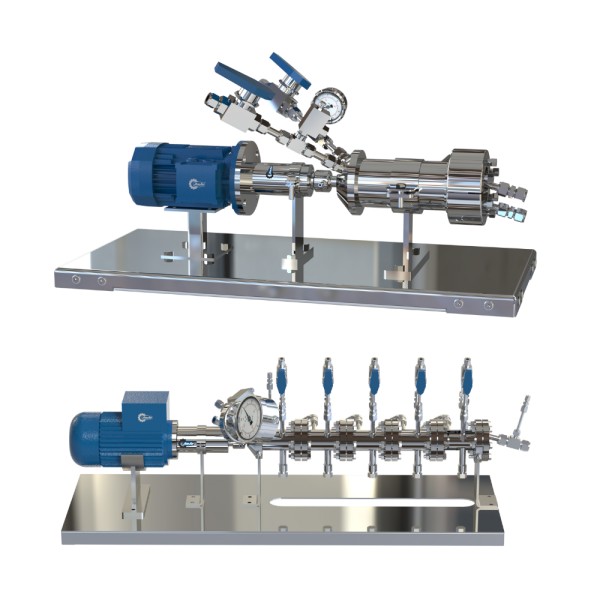
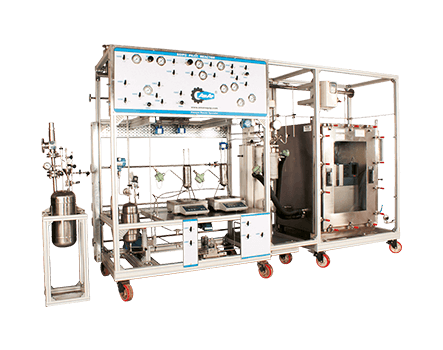
Amar parallel synthesizers integrate multiple reactors into a single, compact platform. These reactors are configured as parallel reactors, allowing simultaneous operation under independent control. Each reactor has dedicated monitoring and control for temperature, pressure, agitation, and dosing, ensuring flexibility in experimental design. When required, reactors can also be arranged for sequential or staged operation, supporting advanced process development workflows.
Using parallel reactors offers several key advantages over single-reactor experimentation. It enables faster optimization by evaluating multiple conditions at once, improves reproducibility by minimizing environmental variation, reduces overall consumption of time and resources, and supports structured DoE-style experimentation. This approach leads to quicker decision-making and more reliable conclusions during process development and high throughput screening.
Yes. Amar parallel synthesizers are purpose-built for high throughput screening applications. They allow side-by-side comparison of different catalyst systems, solvent combinations, reaction temperatures, pressures, and agitation regimes. This makes them particularly valuable for catalyst development, route scouting, solvent selection, and rapid optimization of reaction conditions in both academic and industrial R&D laboratories.
Parallel synthesizers are ideal for reactions where comparative evaluation is critical. Common applications include hydrogenation and catalytic reduction, oxidation and dehydrogenation, alkylation, amination, esterification, polymerization, and materials synthesis. They are also widely used for halogenation, nitration, sulphonation, and other functionalization reactions, particularly in gas–liquid and liquid-phase systems.
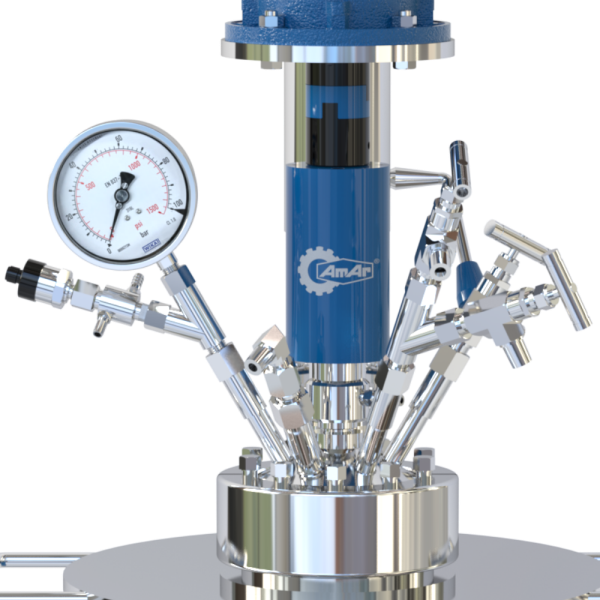
Each reactor in the parallel synthesizer is equipped with zero-leakage magnetic drive couplings and secure split-clamp closures, eliminating dynamic seals and minimizing contamination risks. Additional safety features such as rupture disks, thermowells, vent valves, pressure monitoring, and sampling ports ensure safe and controlled operation during high-pressure or reactive experiments across multiple reactors.
Yes. Amar parallel synthesizers feature integrated gas and liquid dosing systems that allow precise and repeatable reagent addition to each reactor independently. This enables structured experimentation where different reactors operate with varying reagent ratios, dosing rates, or pressure profiles, supporting advanced optimization and kinetic studies.
Parallel reactor systems are available in Stainless Steel 316L as standard, with optional exotic alloys such as Hastelloy, Inconel, and Monel. These materials ensure chemical compatibility, corrosion resistance, and durability for aggressive or specialized chemistries commonly encountered during high throughput screening.
Yes. Amar parallel synthesizers support operation under inert atmospheres such as nitrogen or argon. This makes them well suited for oxygen- or moisture-sensitive reactions, including many catalytic, organometallic, and specialty synthesis workflows commonly evaluated using parallel reactors.
Amar parallel synthesizers are widely used by academic institutions and industrial R&D teams in pharmaceuticals, fine and specialty chemicals, polymers, and material science. They are selected when rapid, reproducible, and data-rich experimentation is required through high throughput screening using multiple reactors within a single, integrated platform.