05 Dec 2023

A large variety of industrial processes are catalytic in nature. Due to process intensification, the number of catalytic reactors in use is increasing. Heterogeneous catalysts are one of the crucial elements of a green chemistry strategy to make the chemical industry more sustainable in the long run.
All of these catalytic processes require the right catalytic reactors. In this blog post, we will specifically focus on processes using heterogeneous catalysts.
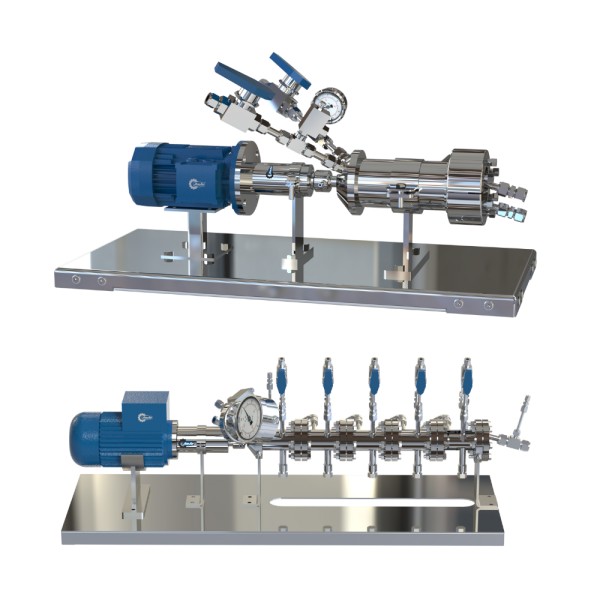
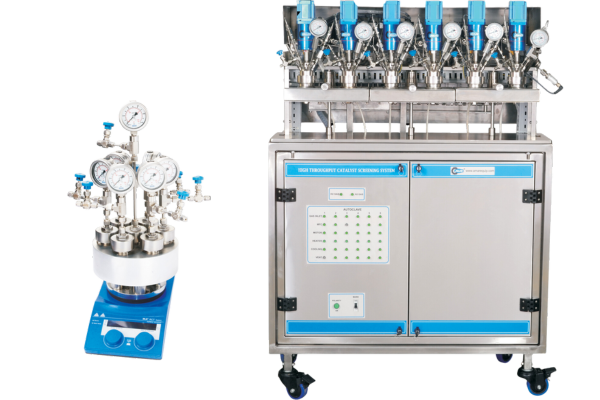
Very often, the initial stages of a process development project involve screening a large number of catalysts. Parallel screening strategies are commonly used for this. The figure below shows one example of equipment we manufacture at Amar for this application. Typically, temperature, pressure, and catalyst loading are the parameters that are varied in order to select the best catalyst.
Oftentimes a catalyst must be screened in flow mode. Typically, pellets, prills, or other forms of catalyst are used for flow mode processes in order to minimize pressure drops. We have several fixed bed catalytic reactors that can perform this function.
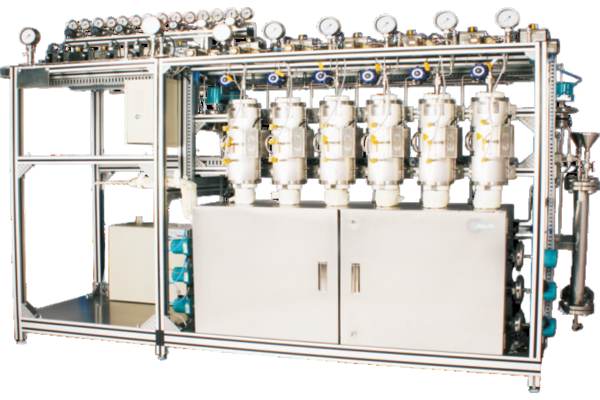
Most customers want a heating jacket to maintain temperatures. Preheaters or cooling jackets are also common for exothermic reactions. Sometimes customers will run the reaction in adiabatic mode (i.e. insulated) or combine several catalyst tubes in a common shell for heating or cooling purposes.
We strongly recommend working with a vendor who is willing to customize catalytic reactors for your application.
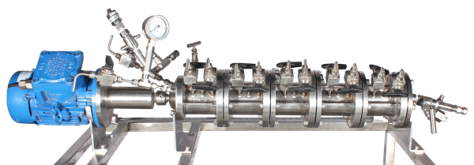
In some cases, flow mode catalytic reactors prefer using a slurry of supported catalysts, e.g., Pd on Carbon. For these applications, the reactor must be chosen very carefully so it does not plug or choke with catalyst particles. One choice we see customers make is our Slurry Flow Reactor, which allows a CSTR cascade to be combined into a single shell, economizing on the use of agitator power and minimizing the number of shaft seals.
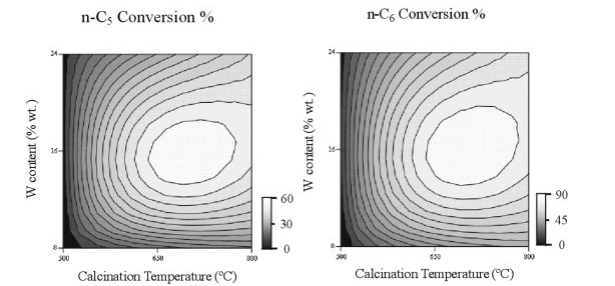
To get good results from catalytic reactors, the Design of Experiments is a crucial aspect. Multiple parameters need to be optimized to maximize yield. For example, the figure below (reproduced from the book by Hagemeyer and Volpe on High Throughput Screening of Catalysts) shows how calcination temperature and Tungsten content can be varied to optimize C5 / C6 conversions.
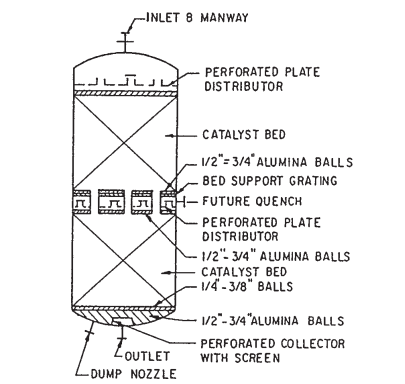
The sketch below shows an industrial-scale trickle bed catalytic reactor used for hydrotreating (from “Multiphase Chemical Reactors” by Gianetto and Silveston 1986). The art lies in designing and fabricating a pilot plant that will faithfully reproduce conditions encountered at an industrial scale.
Again, we encourage you to contact our experts at Amar for more specific advice for your next catalytic reactors projects.