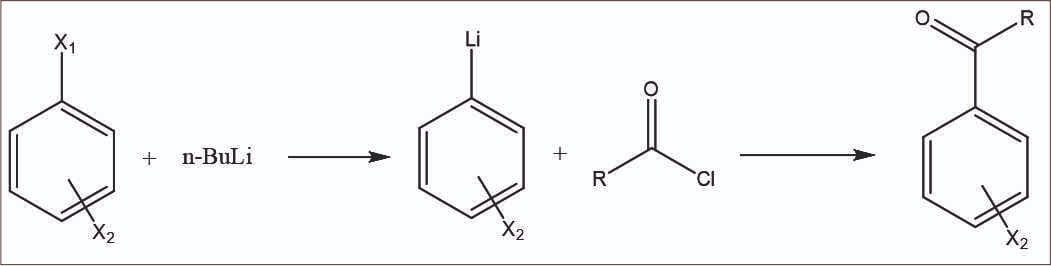
Lithiation reactions are essential in the functionalization of aromatic halogenated compounds. This study investigates the lithiation of an aromatic halogenated compound using n-butyl lithium (nBuLi) as the lithiating agent, followed by the introduction of an acyl chloride derivative as the electrophile (Figure 2).
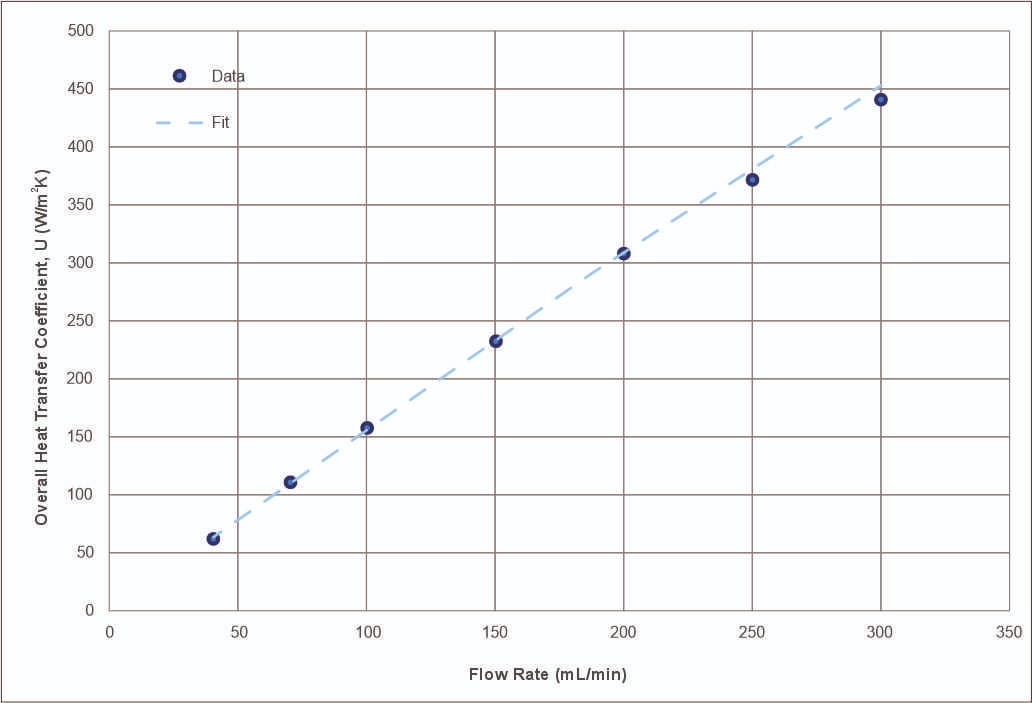
The reaction was conducted in the SlurryFLO® reactor, which showcases an exceptionally high heat transfer coefficient, enabling precise thermal control (Figure 3). Reactions were performed at -10°C with varying residence times (1 min, 2 min, 5 min, and 10 min), and 2 minutes was found to give the best results, ensuring high conversion and minimizing side products.
Lithiation reactions are invaluable in organic synthesis for functionalizing halogenated aromatic compounds1,2. However, these reactions are highly sensitive to both temperature and residence time, requiring tight control to avoid side reactions3. Continuous flow technology provides an effective solution, enabling superior control over reaction conditions compared to batch processes.
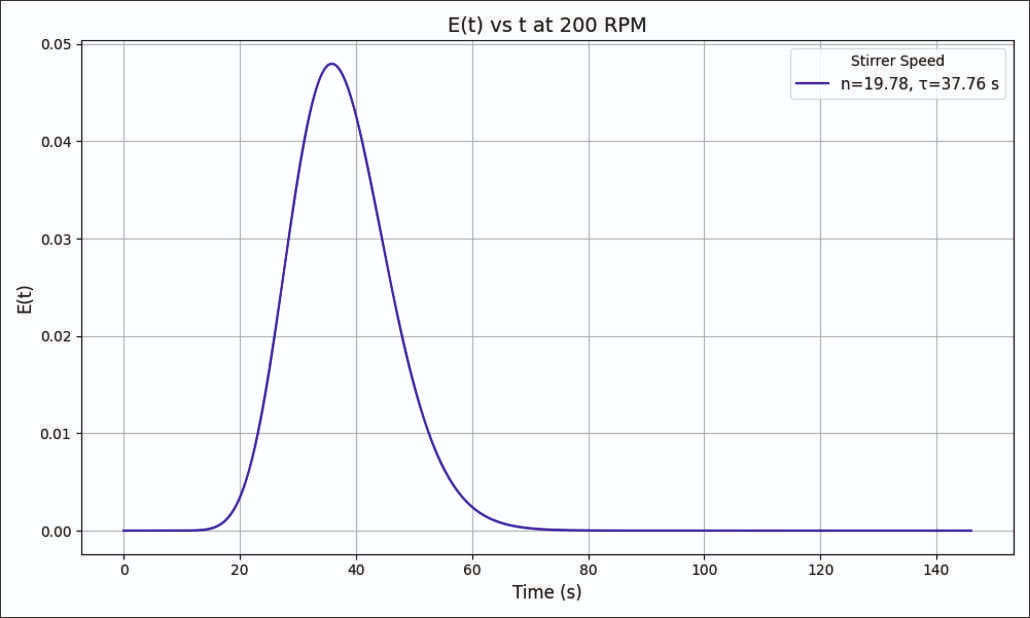
The SlurryFLO® reactor (Figure 4), which exhibits near-ideal plug flow behavior (with N = 20 in the tanks-in-series model at a flow rate of 300 mL/min and 200 RPM) (Figure 1), offers minimal axial dispersion, allowing for more uniform residence time distribution and better process control. Combined with its excellent heat transfer coefficient, the SlurryFLO® reactor provides both the thermal management and flow behaviour necessary for optimizing lithiation reactions.
This study aims to optimize the lithiation and subsequent acylation of an aromatic halogenated compound by exploring different residence times under these ideal flow conditions. The reaction was carried out at -10°C to prevent side reactions and decomposition of the organolithium reagent4.
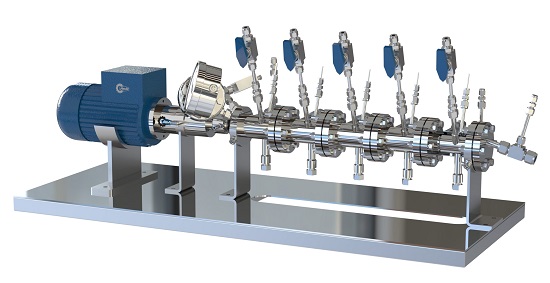
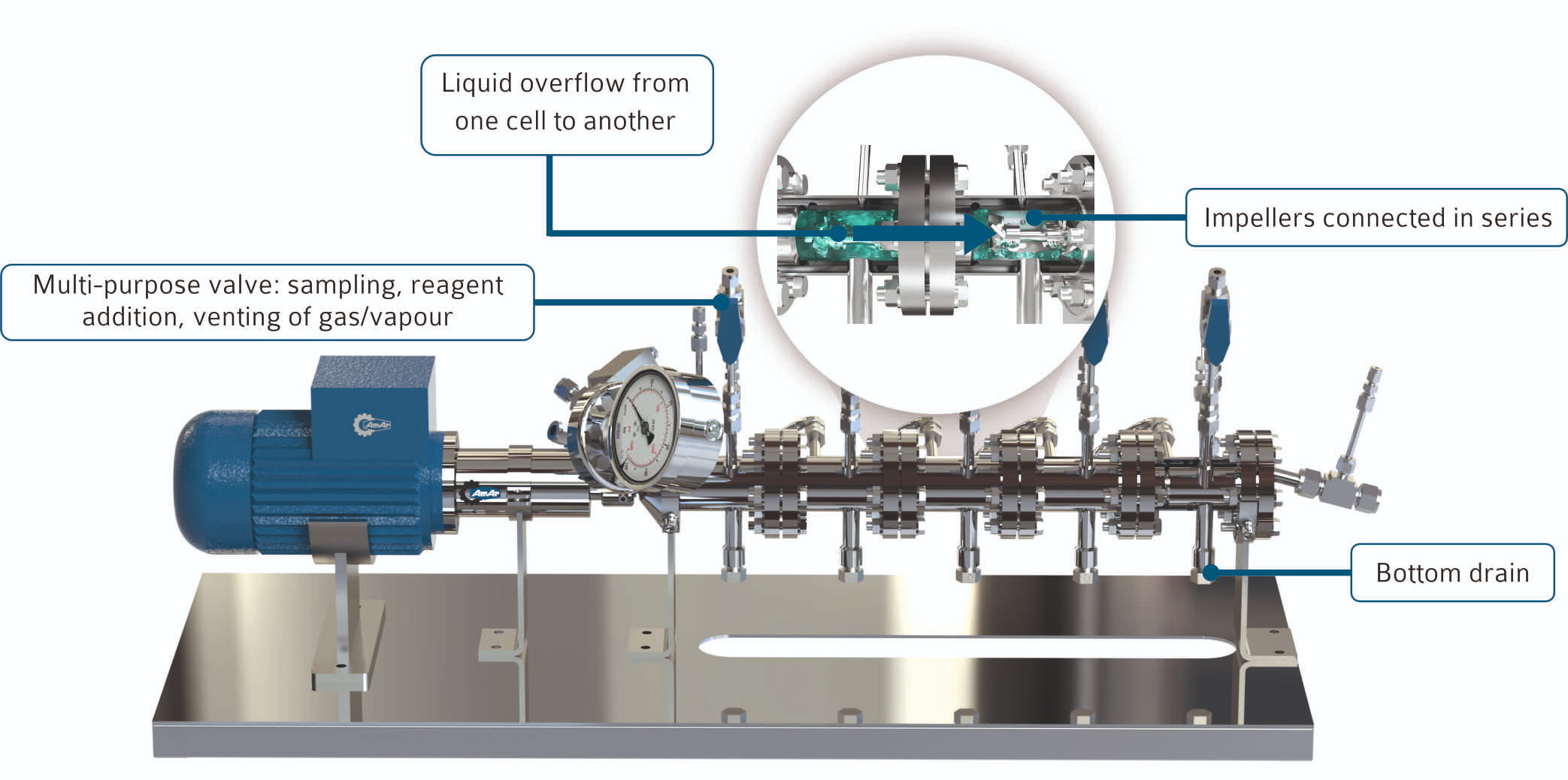
The SlurryFLO® reactor is a versatile continuous chemical reactor designed for performing reactions involving slurries. The key features of the SlurryFLO® reactor include:
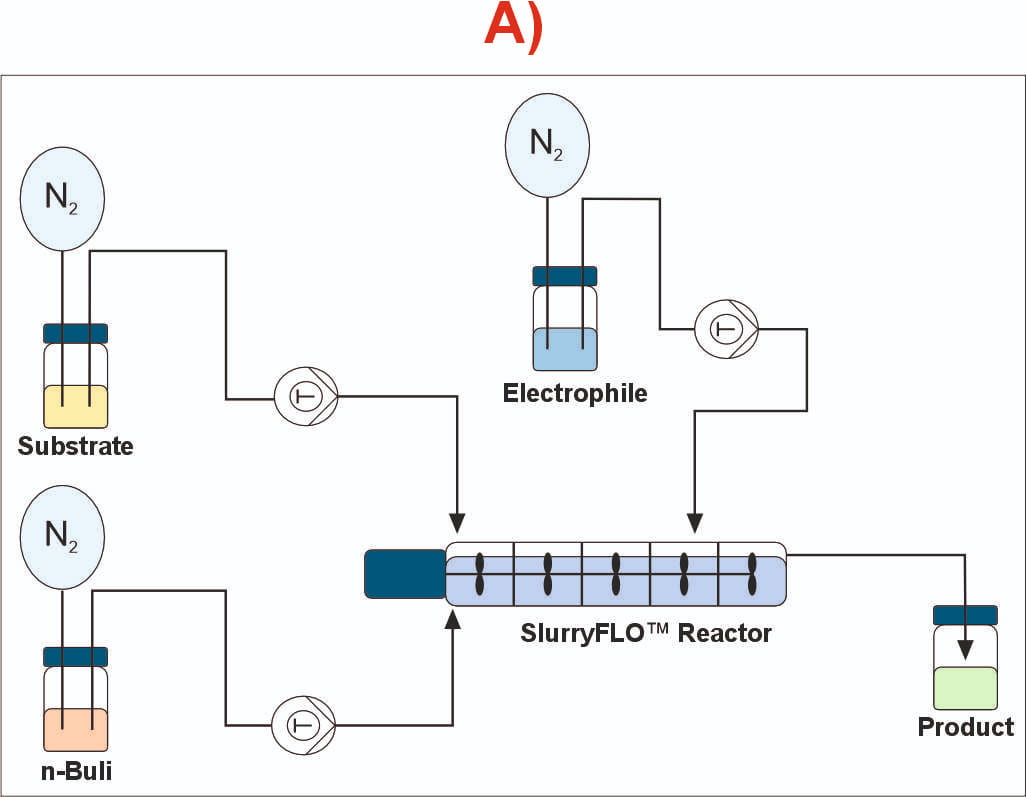
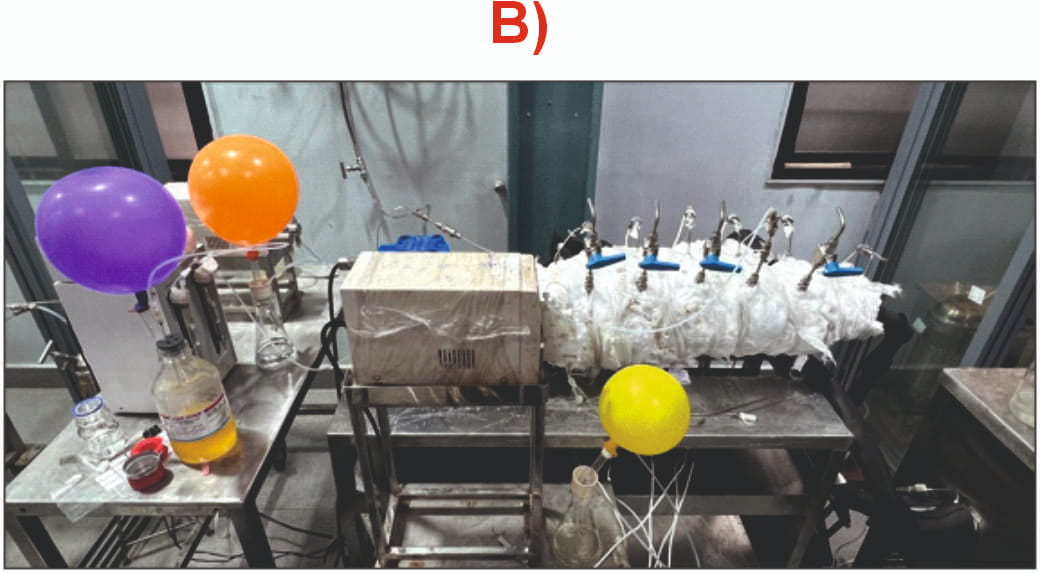
All reagents and solvents were purchased from commercial suppliers and were used without further purification.
Various residence times were tested to determine the optimal duration for complete lithiation and acylation.
The SlurryFLO® reactor’s consistent flow conditions and efficient heat management identified 2 minutes as the ideal residence time.
| Metric | 1 Min | 2 Mins | 5 Mins | 10 Mins |
|---|---|---|---|---|
| % Conversion of Substrate | 84% | 96% | 98% | 98% |
| % Selectivity of Desired Product | 91% | 94% | 80% | 73% |
A 2-minute lithiation time was optimal, providing high conversion with minimal side reactions. The consistent 1-minute acylation step ensured uniform downstream conditions.
In summary, the SlurryFLO® reactor provides a robust platform for precise, scalable lithiation reactions with strong potential for broader flow chemistry applications.