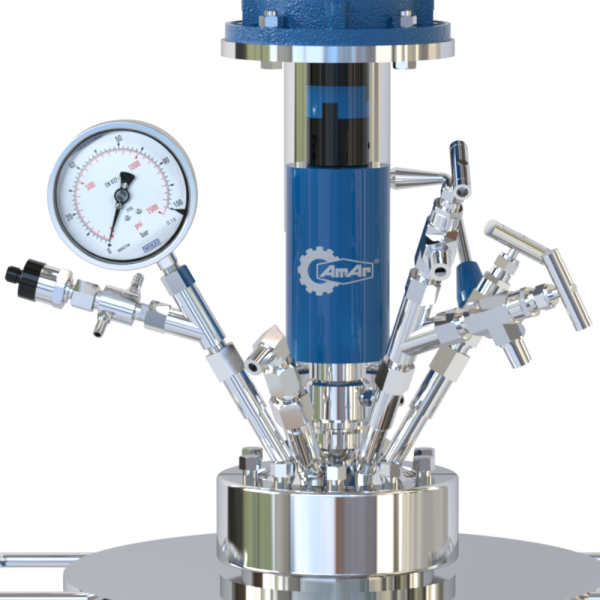
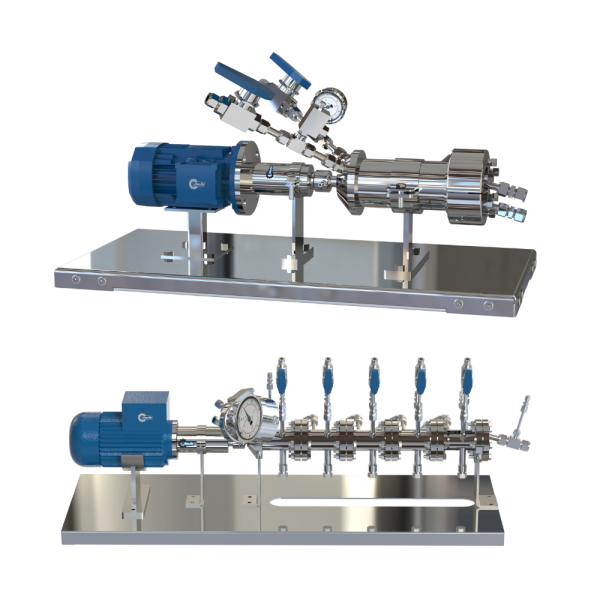
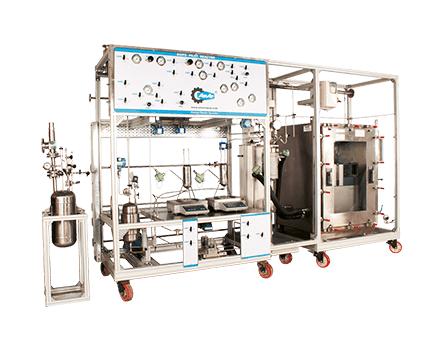
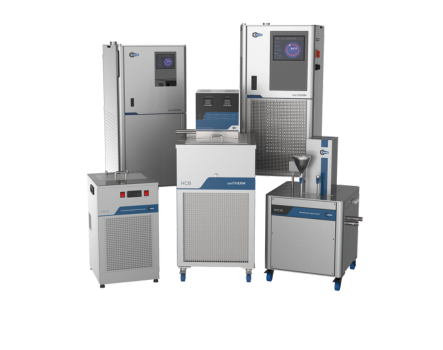
Amar’s Table Top Reactor Systems are compact, plug-and-play continuous reactor units designed for rapid proof-of-concept testing and early-stage process screening. Engineered for versatility, safety, and ease of use, these systems allow researchers to quickly evaluate chemical reactions, test catalysts, and optimize operating parameters right on the laboratory benchtop. With modular configurations, precise temperature and pressure control, intuitive automation, and durable materials of construction, Amar’s table top reactors accelerate feasibility studies, minimize reagent consumption, and deliver reliable baseline data across chemical, pharmaceutical, fine chemical and academic research applications.
Table Top Reactor Systems are compact, plug-and-play continuous fixed bed reactor units designed for rapid proof-of-concept testing and early-stage process screening. Its working is similar to a fixed bed reactor system in which a solid catalyst is packed as a stationary bed inside a cylindrical or tubular reactor vessel. During operation, reactants flow through the catalyst bed while the catalyst remains fixed in place.
The reactants are typically preheated and introduced at controlled flow rates before entering the catalyst bed. As the reactants pass through the packed catalyst layer, chemical reactions occur on the catalyst surface, converting reactants into desired products.
In TTRS, the catalyst is packed as a stationary bed inside a tubular or cylindrical reactor, while reactants continuously flow through the catalyst bed under controlled pressure and temperature conditions. Reactants—such as gas–gas, gas–liquid, or liquid-phase mixtures—are first introduced into the system through controlled feed lines and are typically preheated before entering the reactor. Once inside the reactor, the reactant stream flows through the packed catalyst bed where catalytic reactions occur on the active surface sites of the catalyst.
As the reactants interact with the catalyst, they are converted into desired products while heat is either absorbed or released depending on the reaction type. Temperature control is achieved through external heating systems such as electric furnaces or utility jackets, which maintain uniform temperature across the catalyst bed. The reaction products exiting the reactor are subsequently cooled, separated, and collected, while system pressure is maintained using back pressure regulators.
Common applications include:
Table top reactors offer several advantages for continuous catalytic processing: