06 Oct 2025

The fragrance and flavour (F&F) industry represents one of the most dynamic segments of the specialty chemical sector, serving applications in perfumery, cosmetics, pharmaceuticals, agrochemicals, food additives, and consumer goods. Valued at nearly USD 26.5 billion in 2018, the sector is projected to exceed USD 38.5 billion by 2026, driven by rising consumer demand for diversity, safety, and sustainability.
However, traditional batch processing methods pose challenges in scalability, sustainability, and safety. Manufacturers increasingly seek alternatives that minimize hazardous reagents, improve energy efficiency, and ensure reproducible product quality.
In this landscape, continuous flow reactors offer a transformative solution. Already proven in pharmaceutical and fine chemical manufacturing, flow chemistry reactors are now opening new opportunities for the fragrance and flavour sector. These systems enable continuous manufacturing, improve process control, and reduce environmental footprint — making them ideal for handling volatile, exothermic, or sensitive reactions.
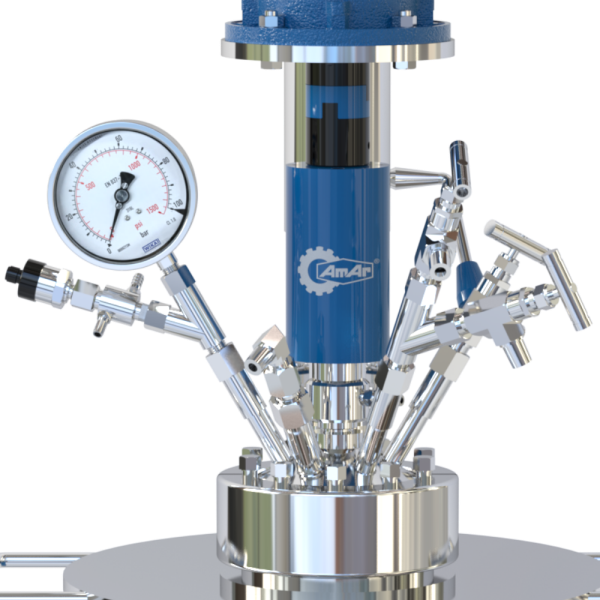
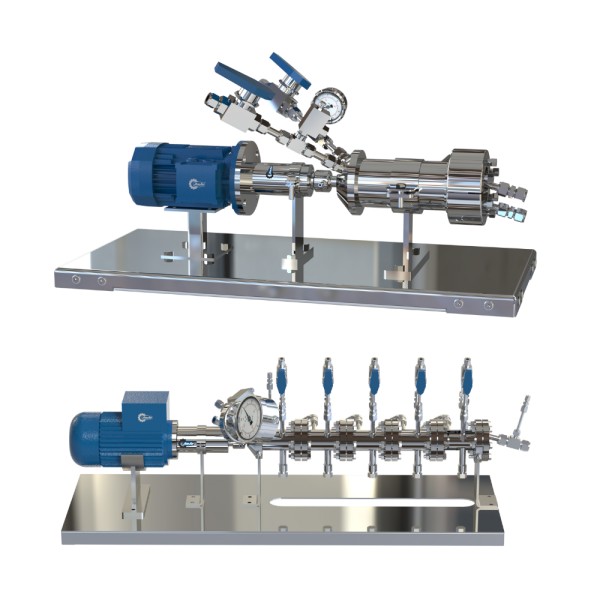
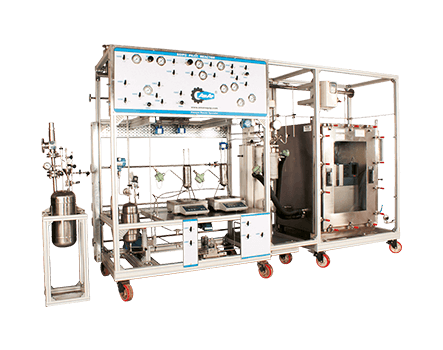
Amar Flow Reactors provide a full range of scalable solutions, from laboratory microreactors to reactor tubular systems for industrial production. With their advanced flow reactor design, Amar enables the fragrance and flavour industry to transition seamlessly from research to production under safe, efficient, and sustainable conditions.
Flow chemistry represents a paradigm shift in how chemical synthesis is performed. Unlike batch operations, continuous reactors allow reagents to move steadily through the reaction zone, where mixing, heat transfer, and reaction occur simultaneously.
For the F&F industry, these advantages enable faster reaction optimization, consistent product quality, and greener operations. Amar’s flow chemistry reactors, built for flexibility and modularity, allow researchers and manufacturers to develop continuous solutions tailored to their chemistries and scales.
The fragrance and flavour industry stands at the cusp of transformation. As sustainability and efficiency drive innovation, continuous manufacturing will become a defining feature of the next generation of aroma chemical production.
Amar Equipment’s scalable flow chemistry reactors — spanning from R&D to production — empower manufacturers to implement continuous reactors with confidence. The Amar Flow Laboratory acts as an innovation hub for pilot-scale trials, collaborations, and training programs, helping industries transition from traditional batch operations to sustainable flow-based systems.
Continuous-flow technology represents the future of fragrance and flavour synthesis. By replacing batch processes with continuous flow reactors, manufacturers can achieve safer, greener, and more efficient production.
From condensation and hydrogenation to oxidation and esterification, flow chemistry provides unmatched control and reproducibility. Backed by Amar Equipment’s expertise in flow reactor design, modular scalability, and global manufacturing standards, the F&F industry can now realize continuous innovation — quite literally.
Amar Flow Reactors are not just tools — they are enablers of a sustainable future for fragrance chemistry.