02 Apr 2026

High pressure reactors play a vital role in modern chemical processing, pharmaceutical development, and laboratory-scale research. These systems are designed to carry out reactions under tightly controlled pressure and temperature conditions, making them essential for processes where reaction stability, safety, and precision are critical. As outlined in your brief, modern reactor systems have moved far beyond manual operation and now rely heavily on automation and digital controls to improve safety, consistency, and efficiency.
A high pressure reactor vessel provides the controlled environment required for reactions that involve elevated pressure, high temperature, or aggressive chemicals. In earlier setups, operators often depended on manual observation and adjustment. Today, however, advanced automation allows continuous monitoring of pressure, temperature, agitation speed, and reactant flow. This evolution has made the high pressure autoclave far more reliable for laboratory, pilot, and production applications.
For manufacturers and research teams alike, automation is no longer a premium add-on. It is becoming a core requirement for running high pressure reactors with greater repeatability, improved operator protection, and better process outcomes.
High pressure reactors are engineered systems used to conduct chemical reactions under pressures significantly above atmospheric conditions. They are commonly used when process chemistry demands precise control over reaction variables such as temperature, pressure, and mixing intensity. These reactors are widely applied in both research and industrial environments where reaction performance depends on maintaining tightly regulated operating conditions.
A high pressure reactor vessel is the main containment body of the system. It is built to withstand demanding internal pressure while safely holding the reaction mixture throughout the process. In many applications, the vessel must also resist corrosion, thermal stress, and chemical attack, which is why material selection is a key design consideration.
A high pressure autoclave is a type of reactor system specifically designed for reactions under controlled pressure and temperature. It is frequently used in hydrogenation, catalytic synthesis, polymer development, specialty chemical processing, and other demanding applications where standard atmospheric reactors are not suitable.
Industries that commonly rely on high pressure reactors include:
Because these industries require precise process control and dependable safety performance, the role of automation in reactor design has become increasingly important.
Manual operation can be a major limitation in high pressure reactor systems. When operators must continuously monitor pressure, temperature, stirring speed, and feed rates by hand, the risk of inconsistency increases. Even small variations in operating conditions can affect reaction performance, product quality, or safety.
Automation addresses these challenges by maintaining critical parameters within defined limits. In a high pressure reactor, precise pressure and temperature regulation is essential for reaction control. Automated systems reduce dependence on operator intervention and enable more stable operation over the full reaction cycle.
This is especially important in research and laboratory settings, where reproducibility matters. A high pressure lab reactor is often used for process development, catalyst screening, and scale-up studies. In such cases, automation makes it easier to repeat experiments under identical conditions and generate reliable data for comparison.
Automation also improves safety in high pressure autoclave systems. Abnormal conditions can be detected instantly, and corrective responses such as alarms, interlocks, or shutdown actions can be triggered automatically. This reduces the risk of operator error and helps protect both personnel and equipment.
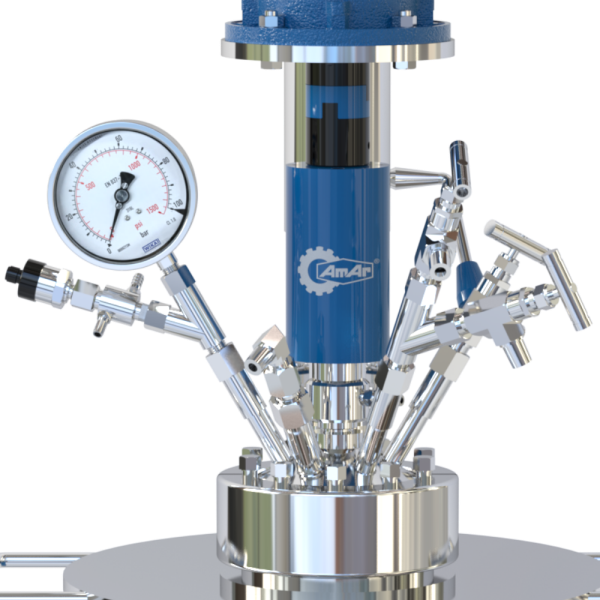
Pressure sensors and transmitters are fundamental to any high pressure reactor vessel. These instruments continuously measure internal pressure and send real-time data to the control system. Accurate pressure measurement is critical for maintaining reaction stability and preventing unsafe operating conditions.
Real-time monitoring is one of the biggest advantages of automation in high pressure reactors. Instead of relying on occasional manual checks, operators can continuously observe process conditions throughout the entire reaction cycle.
Continuous monitoring of pressure and temperature enables tighter process control and quicker response to changing conditions. If the reaction begins to drift outside the desired operating window, the control system can issue an alert or automatically take corrective action.
Digital dashboards provide an organized view of all critical reactor parameters. In a modern high pressure reactor vessel, dashboards can display live trends, setpoints, alarm states, and equipment status. This improves visibility for both operators and engineers.
Alarm systems are another key part of real-time monitoring. In high pressure autoclave operations, alarms help identify abnormal temperature, pressure, or flow conditions before they become serious hazards. Combined with automated shutdown logic, they form an important layer of protection.
Data logging also supports process optimization. For high pressure lab reactor applications, detailed process records help teams evaluate reaction behavior, improve repeatability, and develop stronger scale-up strategies.
Advanced Control Technologies Used in Modern Reactors
Automation in modern high pressure reactors goes beyond basic monitoring. Advanced control technologies allow more precise process management and better overall reactor performance.
Safety is one of the most important reasons to automate a high pressure reactor. Because these systems operate under elevated pressure and temperature, they require multiple layers of protection.
Pressure relief valves are a key safety feature in high pressure reactor vessel systems. They are designed to release pressure if the system exceeds safe operating limits. Rupture discs provide an additional fail-safe mechanism in many high pressure autoclave reactors.
Automatic shutdown systems further improve safety by stopping the process when abnormal pressure or temperature conditions are detected. These systems reduce response time and minimize the chance of escalation.
For hydrogenation and related gas-based processes, gas leak detection systems are especially important. Automated leak detection supports safer operation in applications where flammable or hazardous gases are involved.
Overpressure protection mechanisms, combined with instrumentation, interlocks, and alarm systems, help ensure that high pressure reactors are operated within safe design boundaries. Compliance with relevant industrial safety standards is also essential for both laboratory and industrial installations.
Automation provides clear advantages for laboratory and pilot scale applications. In a high pressure lab reactor, repeatability is critical. Automated control of pressure, temperature, and stirring helps researchers reproduce reaction conditions more accurately from one run to the next.
Reduced operator intervention is another major benefit. Instead of manually adjusting parameters throughout the experiment, teams can focus on analysis, development, and scale-up planning. This improves productivity and reduces the likelihood of human error.
Automated systems also improve documentation. A high pressure reactor vessel equipped with digital logging can record process values across the full batch cycle, creating reliable records for reporting, validation, and process comparison.
For pilot plants and development labs, this leads to faster optimization of chemical reactions, stronger process understanding, and safer operation overall.
Automation improves not only control and safety, but also efficiency. By reducing reaction variability, high pressure reactors can deliver more predictable outcomes and better batch-to-batch consistency.
Controlled heating and cooling also support better energy efficiency in high pressure autoclave systems. Instead of overshooting temperatures or relying on manual correction, automated systems maintain more stable thermal control.
Better process control often translates into improved yield. Whether the goal is product quality, conversion rate, or reaction selectivity, automated high pressure reactor control systems help create the consistent conditions needed for improved performance.
In high pressure lab reactor operations, automation can also shorten experimentation cycles. Faster setup, automated sequences, and better data collection make it easier to run more trials in less time. This is particularly valuable when developing new formulations or preparing for scale-up.
In industrial environments, the benefits of reactor automation become even more significant. High pressure reactors can be integrated with plant-wide automation systems for better coordination with upstream and downstream processes.
Remote monitoring allows engineers and production teams to track high pressure reactor vessel performance without remaining physically at the equipment at all times. This improves visibility and allows faster troubleshooting when issues arise.
Automated batch management systems are also useful in high pressure autoclave processes. These systems help standardize operating procedures, improve batch traceability, and support production consistency across multiple cycles.
Operational data from high pressure reactors can also support predictive maintenance. By analyzing equipment behavior over time, manufacturers can identify signs of wear, drift, or performance degradation before they lead to downtime.
The result is improved production efficiency, lower unplanned interruption, and stronger control over process quality.
Selecting the right high pressure reactor for an automated process requires a careful review of both process demands and system design features.
Automation and digital control systems are transforming the way modern high pressure reactors are operated in laboratories, pilot plants, and industrial facilities. With advanced instrumentation, real-time monitoring, and intelligent control strategies, businesses can achieve tighter process control, improved repeatability, and stronger operational safety.
A properly designed high pressure reactor vessel equipped with automation can help maintain stable pressure and temperature conditions throughout demanding chemical reactions. Automated safety mechanisms, data logging, alarm systems, and remote monitoring all contribute to better performance and more reliable operation.
As chemical processing continues to advance, automated high pressure autoclave and high pressure lab reactor systems will play an increasingly important role in improving efficiency, safety, and process development outcomes across industries. For organizations looking to scale innovation while maintaining control, automation is now central to the future of high pressure reactor technology.