10 Apr 2026

Dr. Ben Egelske, Sr. Chemical Engineer (R&D) | Applied Catalysts
Catalysis, Scale‑Up, and the Role of Reactor Technology in Modern Chemical Development
Interviewed by Dr. Rahul Nabar, Business Development Consultant | Amar Equipment Pvt. Ltd.
“Catalyst development is ultimately about translating chemistry into scalable, reliable processes.”
Applied Catalysts is part of a family of companies focused on advanced materials, ceramics, and catalytic technologies. Through its Applied Catalysts + Technologies division, the company works with industry partners to develop catalytic materials and support process development across the chemical and energy sectors.
In this conversation, Dr. Rahul Nabar, Business Development Consultant at Amar Equipment and Adjunct Professor at IIT Bombay, speaks with Dr. Ben Egelske from Applied Catalysts about the evolving landscape of catalysis, scale‑up challenges, and the importance of strong partnerships between catalyst developers and reactor technology providers.
Applied Catalysts is part of a family‑owned group of companies dating back to 1967. The organization originally started in advanced ceramics and materials technologies and later expanded into catalytic technologies. Today the company operates through multiple divisions, including advanced ceramics and catalysis. The Applied Catalysts + Technologies group focuses on developing catalytic materials and supporting new chemical technologies as they move from laboratory research toward commercialization. I joined the company after completing my PhD at the University of South Carolina under Professor John Monnier. My work now focuses largely on catalytic technology development and helping customers translate laboratory discoveries into scalable processes.
There is a great deal of activity in areas related to energy transition, sustainable fuels, and new catalytic processes. We are seeing increased interest in converting alternative feedstocks such as biomass, biogas, and waste carbon streams into useful fuels and chemicals. At the same time, there is also a renewed focus on domestic manufacturing and strengthening supply chains. Many companies are exploring ways to bring chemical production back to the United States, particularly in specialty and fine chemicals. Catalysis plays an important role in enabling these technologies.
There is often a gap between early laboratory research and large‑scale industrial production. Large chemical companies typically focus on very large‑volume processes, while smaller innovators need partners who can help bridge the development stages. Companies like Applied Catalysts work in this intermediate space—helping develop catalytic materials, supporting pilot‑scale activities, and enabling technologies to move toward commercialization.
Our collaboration began through an introduction several years ago, which led to discussions about reactor systems and process development equipment. We found that Amar Equipment has strong capabilities in designing customized reactor systems for research and pilot‑scale work. Because catalyst development often requires specialized equipment and flexible reactor configurations, the collaboration made a lot of sense for both organizations.
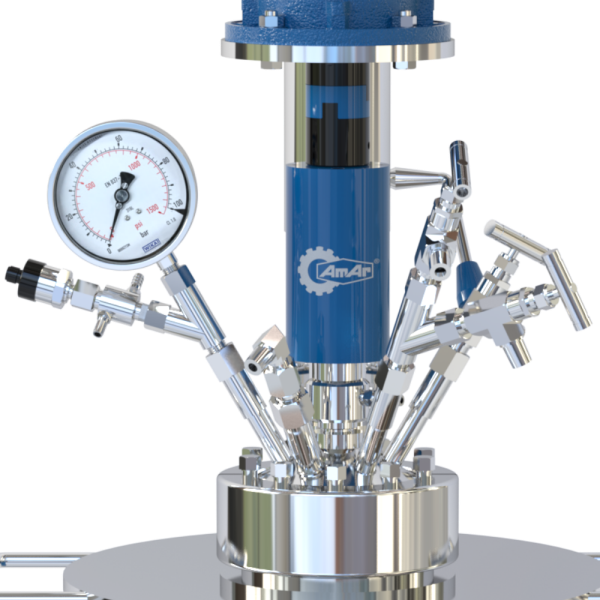
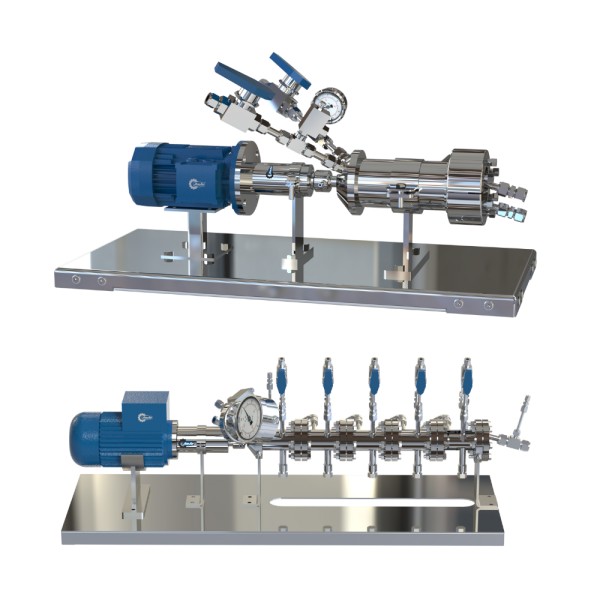
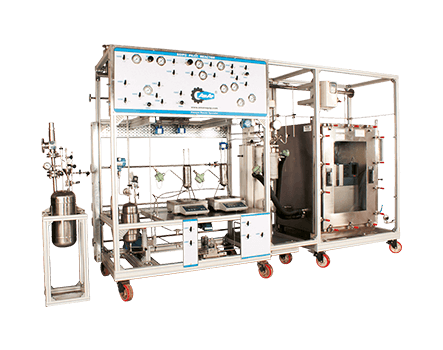
A significant portion of our work involves liquid‑phase reactions and catalyst precursor synthesis, which means stirred reactor systems are very important. These systems allow us to carefully control reaction conditions during catalyst preparation and testing. We also see growing demand for laboratory‑scale flow reactors for studying catalytic reactions under continuous conditions. Applications such as Fischer–Tropsch synthesis, reforming reactions, and biogas upgrading often benefit from continuous flow experimentation. Having access to flexible reactor platforms helps researchers generate reliable data that can ultimately support scale‑up.
Many projects begin with an initial conversation about the chemistry and process goals. From there, discussions often move into more detailed process development topics—such as mass balances, reaction conditions, and equipment requirements. As the project evolves, the work may involve developing P&IDs, defining reactor configurations, and determining the appropriate scale for experimentation or pilot testing.
Yes, in many cases the split is quite balanced. Some chemistries are better suited to batch processing, particularly when dealing with catalyst preparation or reactions that require long residence times. Other processes benefit from continuous flow systems, especially when tighter control over reaction conditions or improved heat and mass transfer is required. Because of this, both batch and flow reactor technologies play important roles in catalytic process development.
Catalysis has always involved a combination of scientific understanding and practical experience. While advances in characterization and modeling have improved our understanding, scaling catalytic materials and processes still requires significant experimental work. Producing catalysts reproducibly and translating laboratory performance into industrial systems remains a complex challenge. This is why reliable experimental infrastructure and careful development work are so important.
In many projects, companies evaluate equipment suppliers from multiple regions. Global sourcing allows organizations to compare capabilities, engineering expertise, and cost structures. The most important factor is finding partners who can provide reliable systems and support long‑term development efforts.
One of the most important things is to find partners you can trust. In technology development, challenges are inevitable and projects rarely proceed exactly as planned. Working with partners who remain committed during difficult phases and are willing to collaborate to solve problems makes a significant difference. Long‑term partnerships and mutual trust are often the key factors that allow new technologies to succeed.
Dr. Rahul Nabar thanked Dr. Ben for sharing his insights on catalysis, process development, and collaboration across the chemical industry. The discussion highlighted how partnerships between catalyst developers, equipment manufacturers, and process engineers are becoming increasingly important for accelerating innovation and bringing new chemical technologies to market.