26 Jul 2025

2025 is a watershed year for contract development and manufacturing organisations (CDMOs). Antibody–drug conjugates, siRNA, mRNA vaccines and CRISPR payloads are no longer niche— they are the new mainstream. Yet every one of these modalities strains conventional batch plants:
At the same time, demand for CDMO capacity is exploding. India’s CDMO market alone hit USD 23 billion in 2024 and is forecast to grow at 10‑11 % CAGR through 2034. (Claight) That growth simply cannot be met by building more “copy‑paste” batch suites—steel, solvents and energy are too scarce and too carbon‑intensive.
Flow‑reactor technology is therefore moving from “nice to have” to critical infrastructure for CDMOs. Below we explain why, and how Amar Flow Laboratory (AFL) is helping Indian and global partners seize the opportunity.

Grand View Research pegs the global flow chemistry market at USD 1.76 billion in 2023, growing 11.6 % CAGR to 2030—pharma is the largest slice. (Grand View Research) Every percentage point shaved from development timelines is gold to venture backed biotechs and IP sensitive big pharma alike.
Inspectors know this. Since ICH Q13 became final, dossiers that pair continuous manufacturing with ALCOA plus (Attributable, Legible, Contemporaneous, Original, Accurate) data trails routinely sail through agency questions. CDMOs investing in flow today are positioning themselves as “audit ready by design.”
With investor ESG scoring and EU Carbon Border Adjustment looming, CDMOs that can document lower kg CO₂ emission per gram of API will win more bids— especially from European sponsors.
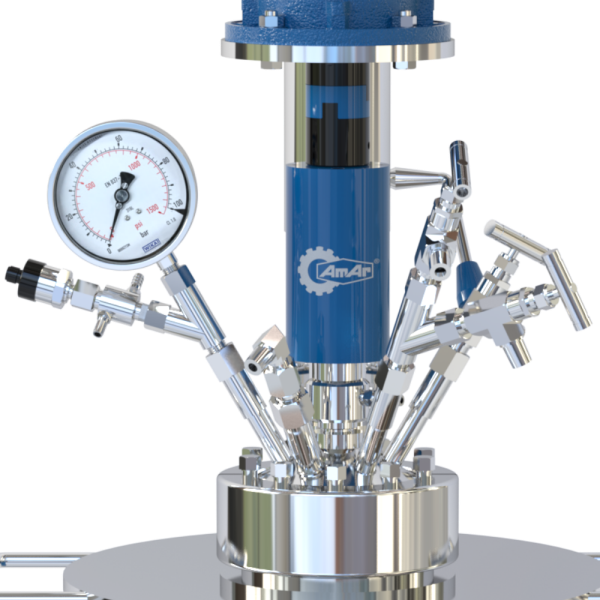
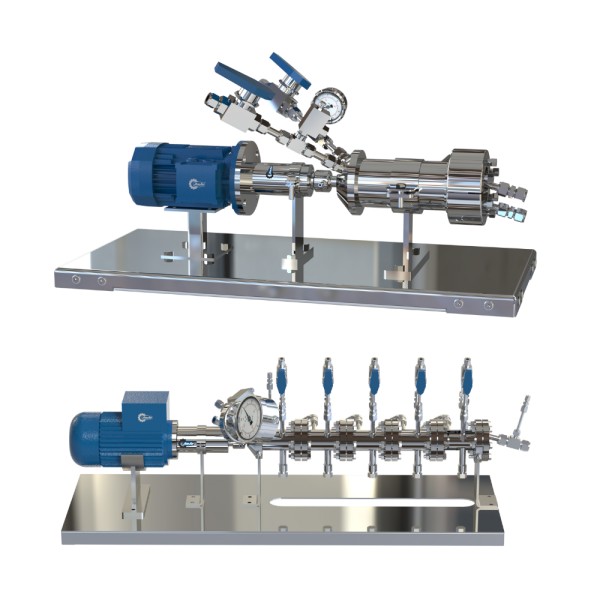
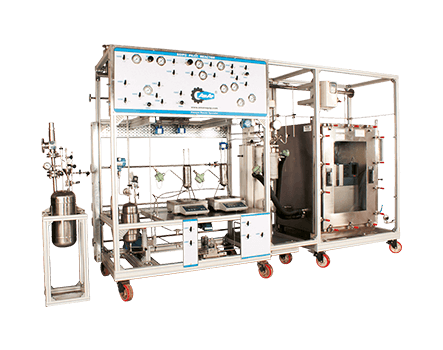
Amar Flow Laboratory—co located with Amar Equipment’s reactor factory in Mumbai—provides the missing link: from benchtop micro reactors to pilot scale skids built under one roof, with an internal QA system aligned to US FDA expectations.
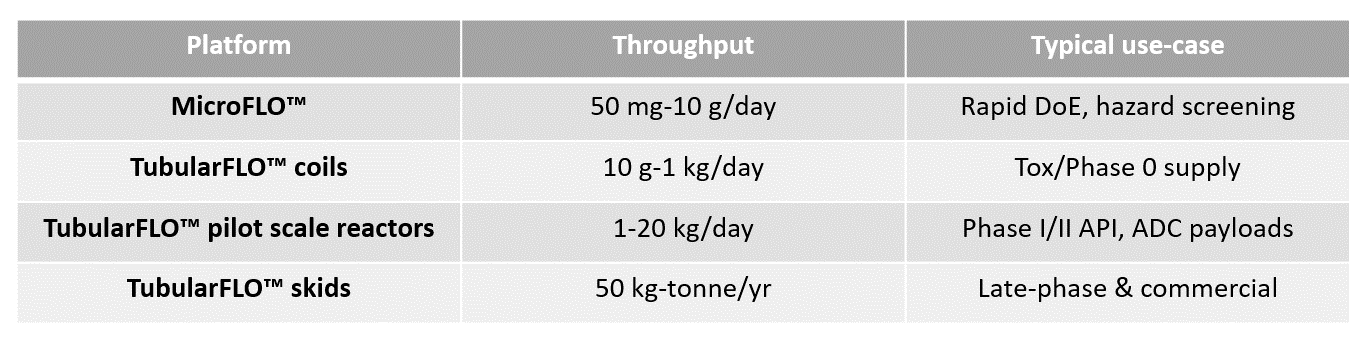
Subsystems—mixers, photochemical modules, electro cells—dock via sanitary clamps, so a client can iterate chemistry on Monday and repeat at 10× scale Friday without re qualifying the suite.
Digital backbone
Engagement models
ROI for CDMOs: a back‑of‑envelope example
In summary, AFL could deliver exceptional returns for CDMOs manufacturing high-potency ADC linkers. While traditional batch processing requires 10 months (6 months development + 4 months engineering), flow technology reduces this to just 4 months through streamlined development, rapid piloting, and modular copy-skid deployment. For a high-value oncology asset with a USD 5 million per month cost-of-delay, this 6-month time savings translates to USD 30 million in Net Present Value against a sub-USD 2 million flow development investment—yielding an extraordinary 1,500% ROI. This dramatic return highlights why flow manufacturing has become essential for CDMOs serving time-sensitive biotech clients, where speed-to-market often outweighs traditional cost considerations in competitive therapeutic areas.
How to get started
Most programmes reach gate 3 in ≤6 weeks.
Final thoughts
Flow chemistry is now a mainstream manufacturing approach—it is fast becoming the backbone of modern CDMO operations. Market analysts forecast double‑digit growth both for India’s CDMO sector and for global flow‑chemistry equipment; regulators are signalling green lights; investors are rewarding low‑carbon, low‑risk production models.
At Amar Flow Laboratory we are proud to help Indian and global partners ride this wave—delivering safer, greener and faster pathways from molecule to medicine.
Ready to see your process in flow?
Visit www.amarflow.com or drop us a line at [email protected] to schedule a meeting with the Flow Team.
Sources: Grand View Research flow‑chemistry market report (2024) (Grand View Research); Expert Market Research India CDMO forecast (2025) (Claight); EMA ICH Q13 guideline (2024) (European Medicines Agency (EMA)); Reuters coverage of Suven–Cohance ADC merger (2024) (Reuters).