20 Aug 2026

A compact, high-temperature, high-pressure tubular reactor system tailored for research with H2, CO, CO2 and N2.
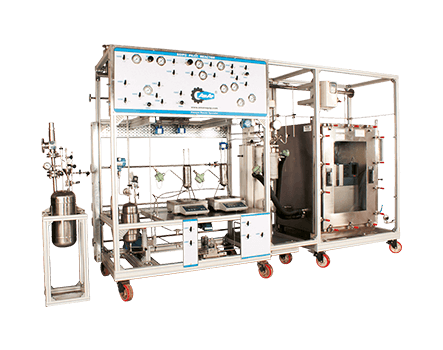
Amar Equipment engineered a customized 100 mL fixed bed reactor system for a university research application in Taiwan involving Fischer-Tropsch synthesis from CO2 or CO with hydrogen. The project evolved through multiple engineering revisions covering gas handling, operating pressure, instrumentation, control philosophy, material documentation and physical installation constraints. The result is a compact research platform built around a tubular reactor, controlled gas feeding, high-temperature heating, downstream condensation and separation, and PLC-SCADA monitoring.
| Parameter | Final specification |
|---|---|
| Application | Fixed-bed reactor for Fischer-Tropsch research |
| Reactor | 100 mL tubular reactor, SS316L |
| Pressure | 20 bar operating pressure |
| Temperature | 400°C operating temperature |
| Gas feed | Dedicated H2 MFC and a second MFC for CO2 / CO / N2; each specified at 2-100 mL/min. |
| Automation | PLC-based control with SCADA data acquisition, pressure indication, temperature control, alarms and interlocking. |
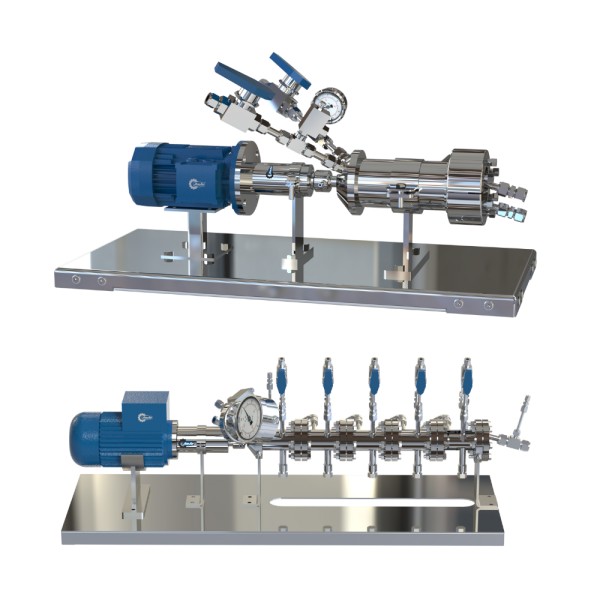
The requirement centered on a laboratory-scale tubular fixed bed reactor capable of operating at elevated temperature and pressure while handling multiple gases. The finalized reactor volume was 100 mL, with SS316L specified as the material of construction. The reactor was designed for 30 bar and 500°C, with intended operation at 20 bar and up to 400°C, making it suitable for high pressure reactor applications in advanced research.
The reactor is heated using a single-zone split electrical furnace rated for operation up to 500°C. The split arrangement also supports access to the reactor tube during catalyst loading and servicing. During technical discussions, the clamp-based reactor-tube design was identified as a distinctive construction feature.
The gas-feed architecture was revised during the project to match the experimental requirement more closely. The final arrangement uses one dedicated thermal mass flow controller for H2 and a second thermal mass flow controller for CO2, CO or N2. Both were specified for a flow range of 2-100 mL/min, 30 bar operating pressure, a 50:1 turndown ratio and wetted parts in SS316.
Gas cylinders > Mass flow control > Preheater > Fixed-bed reactor > Condenser > Gas-liquid separator > Product vessel
Before entering the reactor, the gas stream passes through an SS316 tubular/coil preheater. The preheater was specified for 20 bar operating pressure, 30 bar design pressure, 300°C operating temperature and 400°C design temperature. A ceramic band heater provides the required thermal input. The gas-feed section also includes a catch-pot arrangement for CO2 and a line-heater operating requirement of 50°C where applicable.
The downstream section was designed as an integrated part of the reactor skid rather than as separate laboratory hardware. Reactor effluent first passes through a spiral condenser with an SS316 tube and SS304 shell. The cooled stream then enters a jacketed gas-liquid separator with a one-litre capacity, followed by a one-litre SS316 product vessel for liquid collection.
The gas-liquid separator was specified with a clamped top, torispherical bottom and J-type dip tube. Its operating pressure is 20 bar with a 30 bar design pressure, matching the pressure basis of the main process system.
The system combines local instrumentation with PLC-based monitoring and SCADA data acquisition. The control scope covers gas flow, preheater temperature, reactor temperature, pressure indication and catalyst-bed temperature, together with high-temperature and high-pressure alarms and interlocking.
To match the agreed control philosophy, the PLC-SCADA panel is non-flameproof and is to be located 10 metres away from the reactor system. The field equipment was specified with flameproof protection where applicable, including the MFC enclosures, furnace junction box, ceramic band heater junction box, pressure transmitter and temperature-element junction boxes.
One of the defining engineering challenges was the customer site itself. Access was further restricted by an elevator with an entrance width of about 900 mm and an internal depth of about 1300 mm.
Instead of treating the skid as a fixed standard product, Amar adapted the installation strategy. The system was planned in two separate skid sections that could be transported through the elevator and joined at site using a nut-bolt or clamp arrangement. The agreed site utility of 220 V, three-phase, 40 A was also confirmed as suitable for the system.
For this project, engineering documentation was an important part of the supply scope. The technical discussions covered P&ID and GA drawing review, component catalogues, reactor-tube material certification, PMI-related documentation and material certificates. The purchase order also required a test report, operation manual, product catalogue, quality certificate, manufacturing certificate and material certificate.
This documentation trail was developed alongside the equipment design, allowing the technical configuration, installation approach and material requirements to be aligned before fabrication.
The project began as a technical enquiry and progressed through successive revisions to the P&ID, gas-flow arrangement, pressure rating, control-panel configuration, layout and certification requirements. Following these iterations and the final technical-commercial alignment, the order for the 100 mL fixed-bed reactor system was confirmed in December 2025.
This project demonstrates the value of treating laboratory reactor systems as engineered solutions rather than fixed catalogue products. The final configuration brings together controlled multi-gas feeding, high-temperature fixed-bed operation, pressure management, integrated condensation and separation, PLC-SCADA monitoring and a modular skid arrangement designed around the customer's actual laboratory constraints.
For research programs involving gas-phase catalytic reactions, Amar Equipment can configure fixed-bed and tubular reactor systems around the required chemistry, operating conditions, instrumentation, utilities and site limitations.
Planning a custom fixed-bed or tubular reactor system?
Share your process conditions, gas/liquid feed requirements, pressure-temperature range and site constraints with the Amar Equipment team to develop a suitable reactor configuration.