15 Oct 2026

High-temperature reactions require advanced reactor design, influencing heat distribution, temperature control, pressure, flow rate, catalyst performance, and material strength. Small design flaws can affect conversion, selectivity, catalyst lifespan, and overall performance. Therefore, reactor design must consider the reaction and operating conditions.
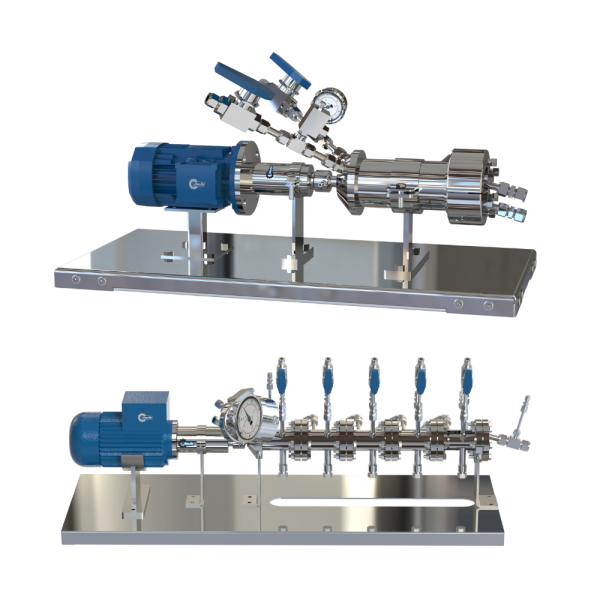
Fixed bed tubular reactors enable continuous catalytic reactions with reactants flowing through a catalyst-filled tube for controlled heating. High-temperature operation presents challenges such as tube size, catalyst packing, heat transfer, pressure drop, and temperature measurement.
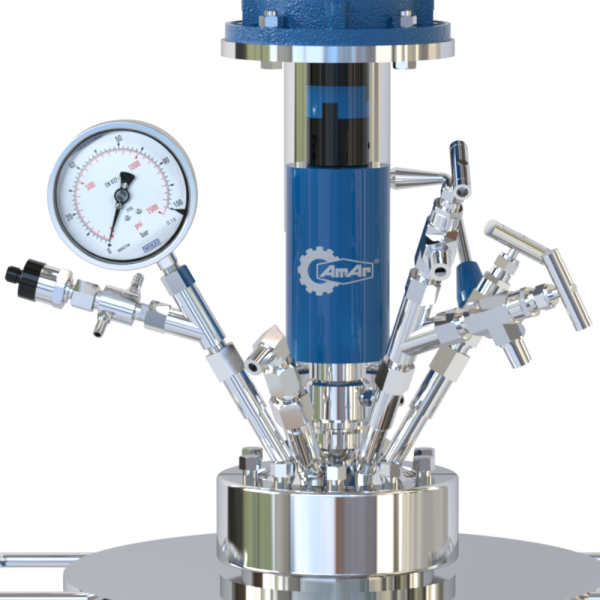
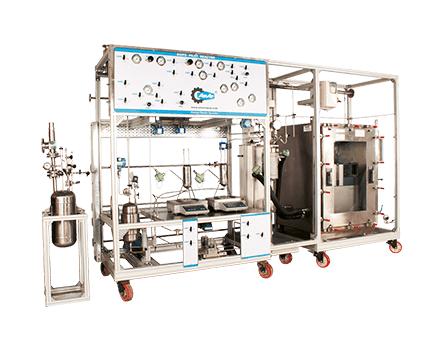
At Amar Equip, we design reactor systems based on the process's specific needs, considering factors like temperature, pressure, feed, catalyst, materials, heating, and flow.
A fixed bed reactor contains stationary solid catalyst particles packed in a cylindrical vessel, used for heterogeneous catalytic reactions.
The term packed bed reactors are also used because the catalyst is packed into a defined reactor volume. As reactants move through the spaces between particles, they contact the catalyst's surface, and the desired reaction takes place.
In fixed bed reactors, the basic process can be understood in four steps:
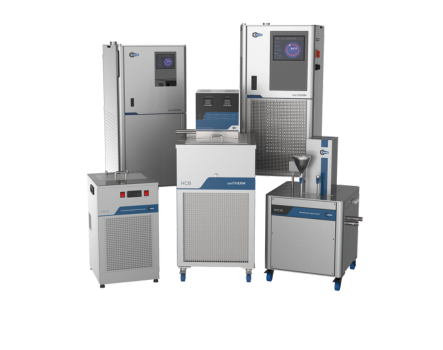
For high-temperature use, the reactor can be placed inside a furnace or heater, with flow controllers, pumps, pressure regulators, temperature sensors, and collection equipment.
Heat management is vital in fixed bed tubular reactors. Reactions produce or need heat, and uneven distribution leads to temperature variations, impacting reaction rates and product quality.
A suitable heating design should consider:
Fluidized bed reactors differ from fixed-bed designs as particle movement in fluidized systems offers strong mixing and heat transfer, whereas fixed beds rely more on reactor geometry and heat-transfer setup.
Tube diameter and catalyst size affect reactor efficiency by impacting pressure drops, heat transfers, and catalyst use. Smaller tubes lower heat transfer but may cause loading, pressure, and temperature measurement issues.
Catalyst particle size also involves a trade-off.
Smaller particles can:
But they can also:
For packed bed reactors, engineers should consider tube diameter and particle size together, along with flow rate, catalyst properties, reaction kinetics, and operating pressure.
A Simple Design Trade-Off
| Design factor | Smaller size | Larger size |
|---|---|---|
| Catalyst particle | Better diffusion path | Higher diffusion limitation risk |
| Pressure drops | Usually higher | Usually lower |
| Heat-transfer distance | Potentially shorter | Potentially longer |
| Catalyst loading | More demanding | Generally easier |
| Flow resistance | Higher | Lower |
The best combination depends on the reaction and operating conditions.
Pressure drop is an important consideration in fixed bed reactors because the feed must move through the spaces between catalyst particles.
Several factors influence pressure drop, including:
A long bed with small particles offers more flow resistance than a shorter bed with larger particles, balancing catalyst contact with acceptable pressure drop.
Estimate pressure drops during the design of fixed bed catalytic reactors, covering expected flow rates and conditions, instead of treating it as an operating issue later.
Good catalyst packing maintains consistent flow, while poor packing causes channeling, leading to uneven reactant distribution and less effective catalysis.
This matters because fixed bed tubular reactors depend on consistent contact between the feed and catalyst.
During catalyst loading, engineers may need to consider:
Uneven packing can also affect heat and mass transfer. Research on fixed beds shows that flow, heat transfer, and mass transfer are closely connected to the structure of the packed catalyst bed.
Material selection is crucial for higher temperatures and pressure. The reactor material must retain strength and be compatible with feed, products, and environment.
Important considerations include:
For fixed bed reactors, material selection does not stop at the main reactor tube. Fittings, valves, sensors, pressure regulators, and other connected components must also be suitable for the operating environment.
In high-temperature systems, monitor thermal expansion since different materials expand at varying rates, which can affect connections and seals.
Consider controlling temperature during reactor design instead of adding it later. Furnace temperature may not reflect actual catalyst bed temperature; sensors might be inlet, reaction zone, and outlet.
A suitable monitoring system can help track:
This is particularly important for fixed bed catalytic reactors where reaction performance can change quickly with temperature.
Both reactor types have useful applications, but they operate differently.
Fluidized bed reactors suspend catalyst particles using an upward flow of gas or liquid. The particles move continuously, creating strong mixing within the bed.
A fixed-bed system keeps the catalyst stationary.
| Factor | Fixed Bed | Fluidized Bed |
|---|---|---|
| Catalyst movement | Stationary | Continuously suspended |
| Catalyst loading | Relatively straightforward | More complex |
| Heat transfer | Depends on reactor design | Generally strong due to particle movement |
| Mixing | Limited compared with fluidization | Strong |
| Catalyst handling | Requires planned loading and removal | Can support continuous catalyst handling in suitable processes |
| Typical use | Catalyst testing and continuous catalytic reactions | Processes requiring strong mixing and heat transfer |
The choice should depend on the reaction, catalyst, and process objectives. Fixed bed reactors are often useful when controlled catalyst contact and straightforward operation are priorities. Fluidized bed reactors can be more suitable when mixing and particle movement are important.
A fixed-bed setup can be used for some pyrolysis applications. A pyrolysis reactor thermally decomposes feedstock with little to no oxygen.
Pyrolysis can be applied to materials such as:
The reactor design relies on the material processed, as factors like feed size, heating rate, reaction temperature, and vapor residence time influence the products.
When fixed bed tubular reactors are adapted for pyrolysis, heat transfer becomes particularly important. The feed must reach the required temperature, while vapors and gases must move through the reaction zone under controlled conditions.
A pyrolysis reactor may also require downstream equipment to cool and condensed vapors. The complete system must be considered, not just the heated reactor section.
The design used for one pyrolysis reactor application may not suit another. Feed characteristics and desired products should guide the reactor configuration.
High-temperature reactor performance depends on several connected design decisions. Heat transfer, tube diameter, catalyst size, packing, pressure drop, material selection and process control all influence the final system.
For fixed bed tubular reactors, evaluate these factors together rather than separately. For example, a change in catalyst size can affect both reaction performance and pressure drop. Similarly, changing tube dimensions can influence heat transfer and catalyst loading.
At Amar Equip, we develop reactor systems based on the specific requirements of the intended application. Our approach considers operating conditions, catalyst characteristics, materials, heating requirements, and process flow when developing fixed bed reactors and related systems.
Whether you're working with packed bed reactors, catalyst testing, or a pyrolysis reactor, having a clear understanding of the process is essential for choosing the appropriate configuration. Reach out to Amar Equip to discuss your application and reactor design needs.